
-
Pottery Village of Arita Should Be on Your Japan Travel List【Saga Prefecture, Arita City】
Author: Federica Morgandi
Arita is widely regarded as the birthplace of Japanese porcelain. Around the early 1600s, a Korean potter (Kanagae Sambee / Yi Sam-Pyeong) discovered high-quality kaolin clay near a mountain in Arita.
This discovery sparked the development of what became known as Arita ware porcelain (有田焼, Arita-yaki) which, over time, gained a reputation both in Japan and overseas.
目次
Craftsmanship in Both Traditional and Decorative Styles

Arita Ware (Porcelain)
Arita ware is known for its delicate translucent-white porcelain body, often decorated in under-glaze blue, and later with over-glaze colours, producing vivid, elegant works that captivate both domestic and international markets.
Over time, various styles evolved: plain white porcelain, blue-and-white, colourful enamelled styles (e.g. Kakiemon style), ornate pieces using gold and rich colours, known abroad under broader classifications like Imari ware, from the neighboring town.
Even after porcelain ceased being heavily exported (due to competition from China and other factors), the craft tradition endures. Today, local artisans preserve both classical methods and explore new designs, so the tradition can keep evolving.
Global Influence of Arita Ware

Arita Porcelain park
From the mid 17th century, Arita (and Imari) porcelains were exported internationally, especially to Europe, through the port in Imari. These wares heavily influenced European ceramics and were treasured by nobility and collectors abroad.
The distinct combination of Japanese craftsmanship and overseas demand helped Arita become a global name, and European potteries later imitated their styles.
Arita Is Alive With Tradition, Historic Kilns, Museums, and Craft Culture
Today, Arita remains an active centre of ceramic production. Historic kilns are still in operation, allowing visitors to explore them; artisans craft porcelain by hand; and visitors can witness traditional methods or even try their hand at pottery-making themselves.

DIY pottery decoration
The Kyushu Ceramic Museum, near Arita Station, showcases centuries of ceramic artistry from the region, from ancient pieces to modern creations, offering valuable insight into the craft’s evolution.

Porcelain park garden

Porcelain park garden
For those interested in a more immersive experience, Arita Porcelain Park offers a blend of history and fun: a European-style complex with exhibits of both European porcelain and Arita ware, kiln tours, workshops, and a beautiful garden.
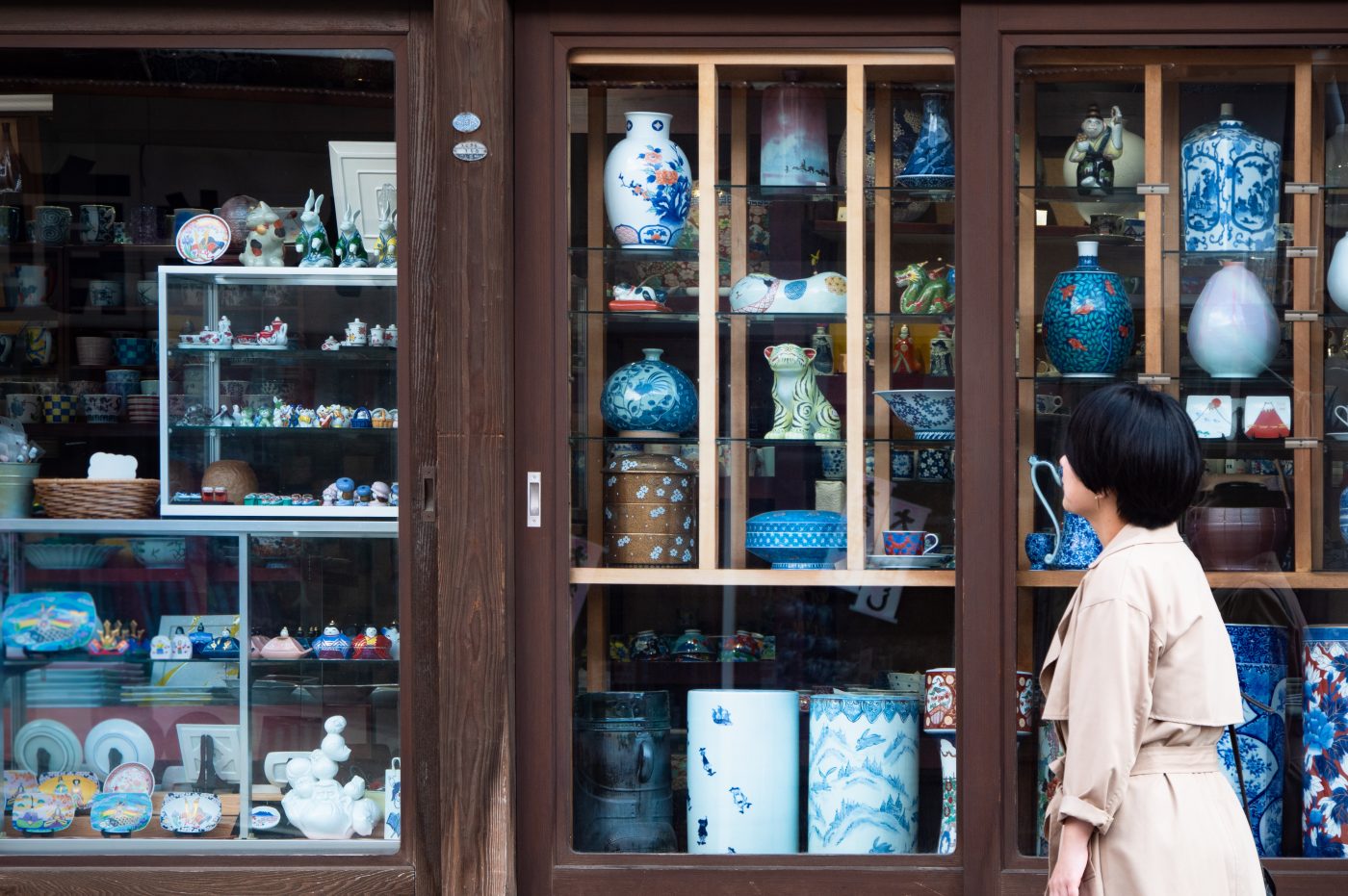
More generally, Arita is good for shopping and finding timeless pieces, from small ceramics that you can gift to bigger pieces for yourself as well.

Arita Porcelain shop
One of the best streets to stroll through is between Arita Station and Kamiarita Station. Here, many old shops, houses and other retro architecture remain. Also, here is a fabulous Torii gate covered in porcelain.

Torii gate with porcelain
And while shopping districts like Arita Sera and other independent stores are good to visit, you can also try decorating a ceramic piece yourself, as there are craftrooms for that and shops specializing in that.
Popularity of Arita Today
Every year during Golden Week in Japan (end of April to early May), the Arita Ceramics Fair draws a large crowd: approximately 1 million people visit over the week to explore around 500 stalls all through the town. This makes it one of Japan’s biggest pottery markets to date!
The towns of Arita and Imari attract not only pottery enthusiasts and collectors, but also casual travellers interested in culture, history, and artisan craftsmanship.
Because the area is relatively quiet and not so crowded, Arita is valuable for the relaxed, authentic atmosphere, where you can experience living tradition up close.
Visitor Information
■ Arita Será (shopping complex): Usually open around 09:00–17:00, year-round, with shops, galleries, and restaurants.
■ Kyushu Ceramic Museum: Commonly 09:00–17:00 (closed Mondays/New Year), free entry for the permanent collection.
■ Tourist Information Offices: Often open 09:00–17:00 / 08:30–17:15 for general sightseeing support.
■ Arita Porcelain Park: A pottery-themed park with gardens and exhibits (opening details vary with exhibitions; check ahead).
Access Information
■ Address (Arita Station*): 989 Arita, Arita-cho, Nishimatsuura-gun, Saga Prefecture 844-0001
*limited express trains do not stop at Kami-Arita Station, which is closer to many of the town’s attractions than Arita Station. People wishing to travel to Kami-Arita Station should take the limited express train as far as Kohoku (45 minutes) and transfer to a local train to Kami-Arita (35 minutes).
■ Fukuoka’s Hakata Station and Arita Station are connected once per hour by direct JR Midori and JR Huis Ten Bosch limited express trains. (about 90 minutes, costs about 3500 yen, and is covered by the JR Pass and Kyushu Rail Pass).
■ Public buses in Arita exist but are infrequent, especially on weekdays. Many visitors rely on rental cars or taxis for shorter hops between museums, parks, and scenic spots.
■ Airports: Saga Airport and Fukuoka Airport
最新の市町村紹介

成田空港から車で20分! 世界に一番近い田舎「多古町」が冬~春の観光情報をお届けします!【千葉県多古町】
2026年1月5日

レトロな街並みを散策!宇佐市&豊後高田市おすすめ観光スポット巡り【宇佐市×豊後高田市】
2025年12月22日
Pottery Village of Arita Should Be on Your Japan Travel List【Saga Prefecture, Arita City】
2025年12月16日

宇佐と中津の歴史と自然を巡る旅―おすすめ1日観光プラン!【大分県宇佐市×中津市】
2025年12月11日

中津市の城下町エリアを観光!おすすめ散策スポット
2025年12月1日


